Ashes
Ashes can be kept in a chamber pendant or urn necklace, or incorporated into glass or resin. Check how the piece is sealed and who does the filling—you or the maker.
Memorial jewelry falls into two basic groups: pieces that carry a tiny portion of a pet’s ashes, and pieces that remember the pet through a paw print, engraving, fur, a photograph or another personal detail. If it will be worn often, the material and closure matter just as much as the design.
The sections below compare ash chambers, paw-print pieces, common materials, typical prices and everyday care.
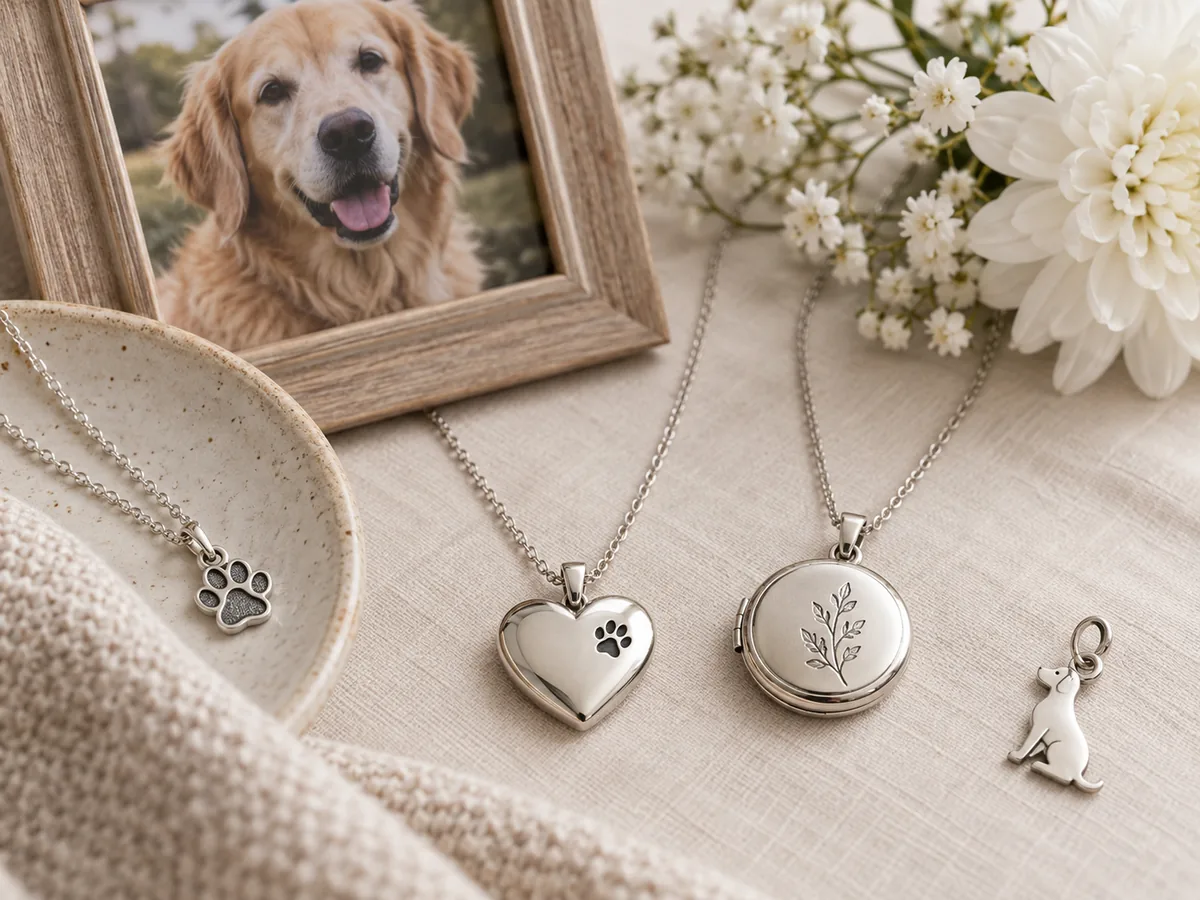
Pet cremation jewelry includes tiny urn pendants and other wearable keepsakes made in memory of a pet. A chamber pendant holds a small amount of loose ashes. In glass or resin jewelry, a trace of ashes can be incorporated into the material itself. Paw-print, photo and engraved pieces may use no ashes at all.
A hollow pet ashes necklace is both jewelry and a tiny container, so the closure, capacity and material need closer attention. A paw-print or engraved pendant has no chamber to fill, so the practical questions are more about the metal, finish and personalization.
Before comparing styles, decide what you want the keepsake to preserve: ashes, fur or whiskers, an actual paw or nose print, a photograph, or simply a name and date.
Ashes can be kept in a chamber pendant or urn necklace, or incorporated into glass or resin. Check how the piece is sealed and who does the filling—you or the maker.
Fur or whiskers can be placed in some lockets, clear keepsakes, resin pieces or glass designs. The maker should state how much material is needed.
An actual paw or nose print can be reproduced in engraved or cast jewelry from a clear ink print, clay impression or high-resolution image.
For a photo locket or engraved-photo pendant, use a sharp image with good contrast; small jewelry cannot preserve every fine detail in the original photograph.
A name, date or symbol can be engraved on a disc, bar, heart or paw-shaped piece without using ashes, fur or an original print.
Most ash-holding pendants take only a very small amount — often a pinch or a small fraction of a teaspoon. They are not intended to hold all cremated remains, and the exact capacity varies by shape and maker.
Because the chamber is so small, most ashes remain in a larger urn or another keepsake. Do not pack material into a narrow opening; use the supplied filling tool and follow the stated capacity and sealing instructions.
If you plan to use ashes in the jewelry, confirm that the cremation arrangement returns individual cremated remains. Paw-print, photo and engraved pieces can be made without ashes.
| Jewelry type | Typical market range | Usually best for |
|---|---|---|
| Stainless-steel ash pendant | About $30–$100 | Durable, lower-cost everyday option |
| Sterling-silver or personalized pendant | About $75–$250 | Traditional jewelry look and engraving |
| Handmade glass or resin memorial jewelry | About $80–$300+ | Visible inclusions and one-of-a-kind designs |
| Solid-gold or fine custom jewelry | Several hundred dollars and up | Heirloom-style memorial pieces |
These figures are broad market ranges rather than Loving Companion prices. Custom work, gemstones, chain quality, engraving and metal weight can move the final cost well outside the examples above.
Stainless steel is durable, relatively affordable and easy to maintain, which makes it practical for frequent wear. Check the exact alloy rather than relying on a description such as “silver tone.”
Sterling silver has a traditional jewelry finish and takes engraving well, but it can tarnish and usually needs occasional polishing.
Solid gold is often chosen for heirloom pieces. Vermeil, gold-filled and plated finishes are different constructions, so their durability and care requirements are not the same.
In glass or resin jewelry, ashes, fur or color can remain visible in the finished piece. These materials are generally more delicate than solid metal and are best stored separately from harder jewelry.
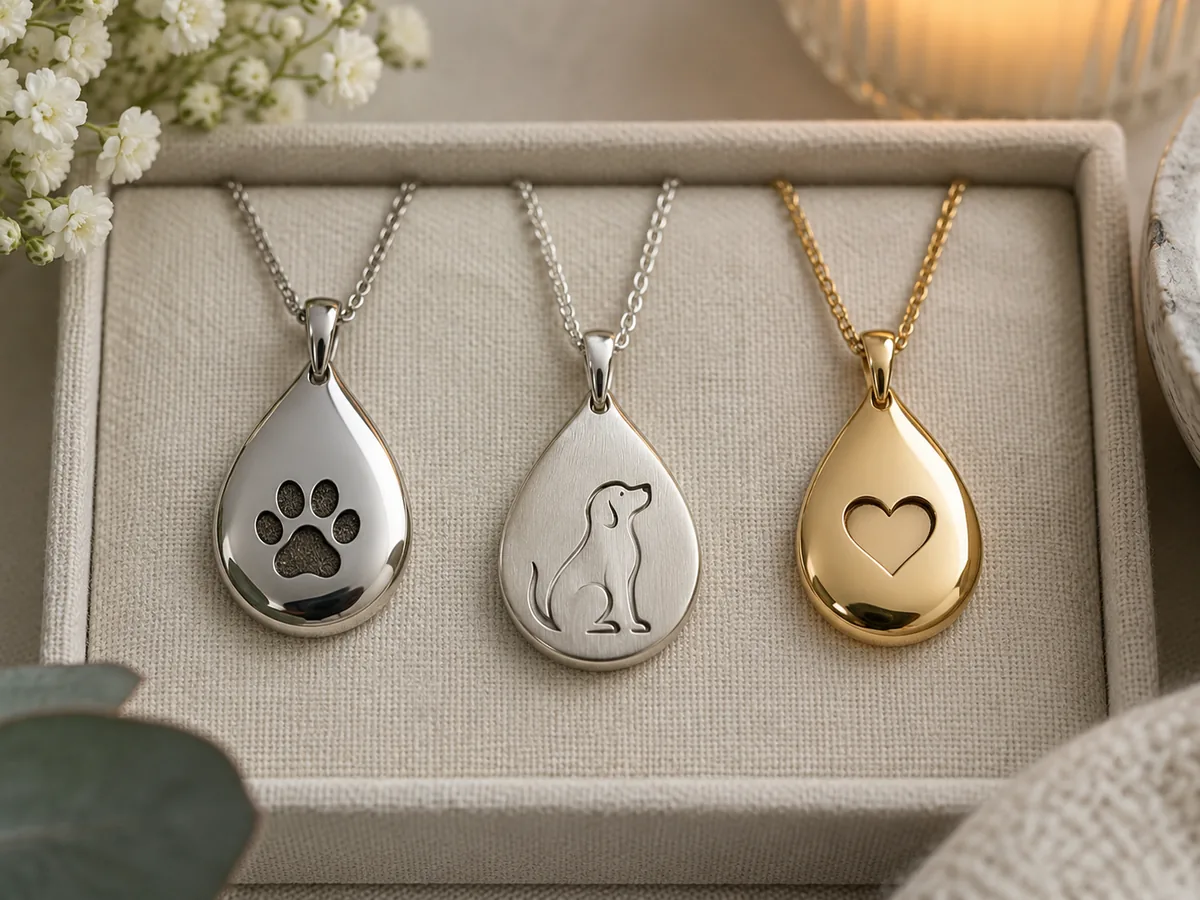
A paw print can form the main design or be reproduced from an existing print. It gives the piece a detail that belongs to one specific pet without adding an internal ash chamber. A custom reproduction is different from a generic paw symbol.
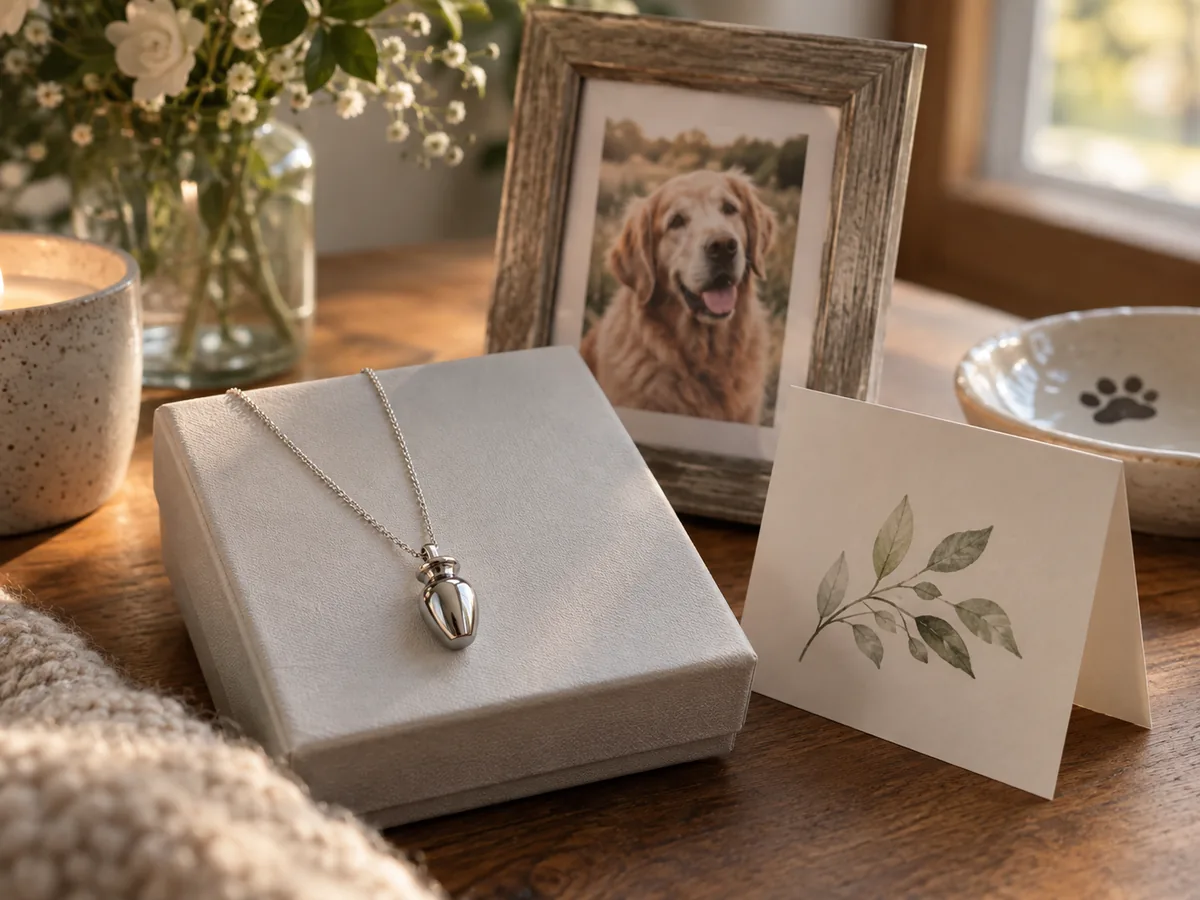
Names, initials, dates, short messages and photographs can personalize a simple pendant. For permanent engraving, ask to see a proof first, especially when a name or date must be exact.
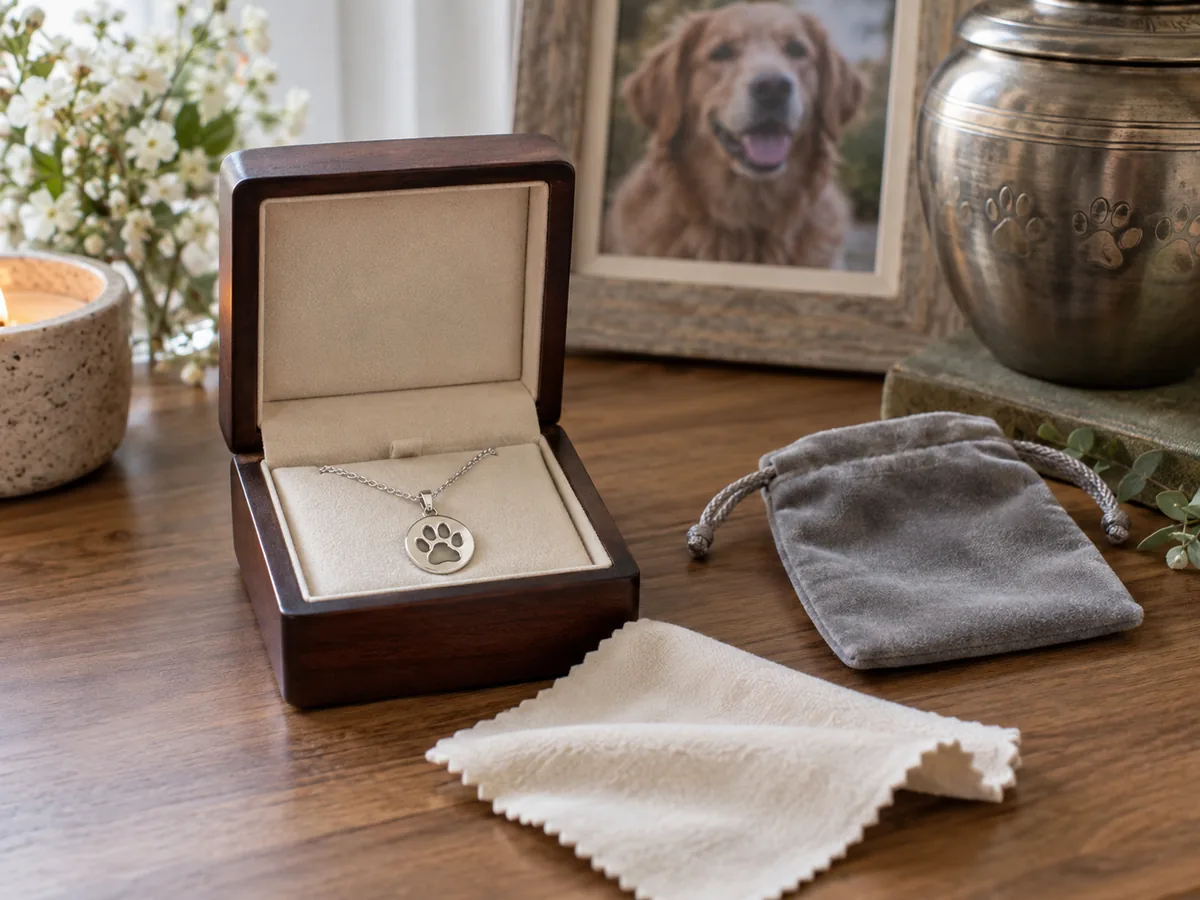
An urn necklace has a tiny internal chamber, usually reached through a threaded cap or screw. The capacity is intentionally small. For regular wear, the security of the closure, the chain and the care instructions matter more than squeezing in a little extra material.
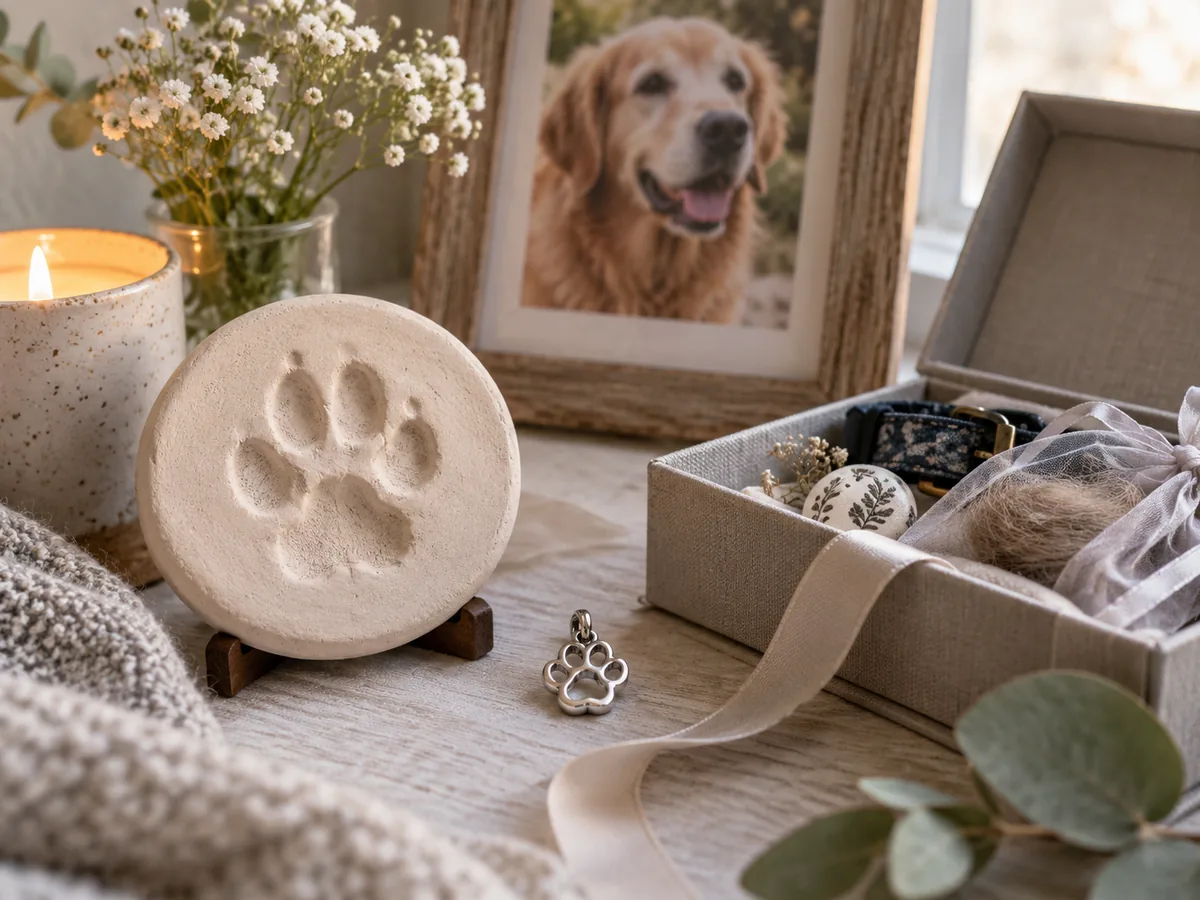
Many families keep most ashes in a larger urn and place only a tiny symbolic portion in jewelry. Others pair an urn with a paw-print, photo or engraved piece that contains no ashes at all.
For ash-holding pieces, look for a clearly described threaded closure and written filling instructions.
Prefer stainless steel, sterling silver or a stated gold karat over vague wording such as “premium metal.”
If material must be mailed, check how it is labeled, stored, tracked and returned.
Confirm spelling, dates and the final design before permanent engraving or casting.
A secure pendant still needs a suitable chain and clasp. Check thickness and replacement options.
Find out whether the piece should be removed for swimming, showering, exercise, lotions or cleaning.
Many solid-metal pendants are suitable for regular wear, but the first part to show wear may be the closure, chain, plating or adhesive rather than the pendant body.
With a chamber pendant, loose cremated material sits inside a small compartment that can be opened for filling. In ash-infused jewelry, a trace of ashes becomes part of the glass, resin or other material used to make the piece.
A chamber can be filled without sending ashes to a maker. Infused work is different: the memorial material is incorporated into the visible design during production.
A generic paw motif is simply a design. A custom paw-print piece reproduces the lines and shape of one specific animal’s print. If the exact print matters, ask whether the maker works from ink, clay or a clear image and whether a proof is provided first.
If carrying a small physical portion of ashes is important, an ashes pendant serves that purpose. A paw print, engraving or photograph avoids the need for a chamber, filling and sealing.
When a maker asks you to mail ashes, fur or an original print, read the handling policy before paying. Check who the business is, look at examples of finished work, confirm the stated turnaround time, and find out what happens to any unused material. Send only the amount requested.
If you might order a custom keepsake later, save the details that cannot easily be recreated: an original paw or nose print, a small fur clipping, whiskers or a favorite photograph.
Ash-chamber jewelry can still be chosen later if individual cremated remains are returned. A paw print or fur clipping has to be collected earlier, so ask the cremation provider before the cremation if you want either one saved.
Most ash-holding jewelry uses only a very small amount, often a pinch or a fraction of a teaspoon. Capacity varies by design, so use the maker’s stated capacity and filling tool rather than estimating.
No. Paw-print pendants, engraved charms, photo lockets and similar memorial pieces do not need cremated remains.
Stainless steel is durable and relatively low maintenance. Sterling silver has a traditional jewelry finish but can tarnish. Solid gold is usually the more expensive heirloom option, while glass and resin allow ashes, fur or color to remain visible in the piece.
Do not assume it is waterproof. Water can affect threaded closures, adhesives, plating or chains even when the base metal itself tolerates moisture.
Yes. A paw-print charm or engraved pendant is a common alternative. A custom piece can reproduce an actual print; a generic paw motif is symbolic.
Some lockets, clear keepsakes, resin pieces and glass designs can incorporate a small amount of fur or whiskers. Confirm how much is needed and whether unused material is returned.
An engraved name, date, initial, photograph or symbolic paw design can be used even when no ashes or original paw print are available.
Stainless steel generally needs less polishing. Sterling silver has a more traditional finish and engraves well but can tarnish. For sensitive skin, the exact alloy and chain material matter.